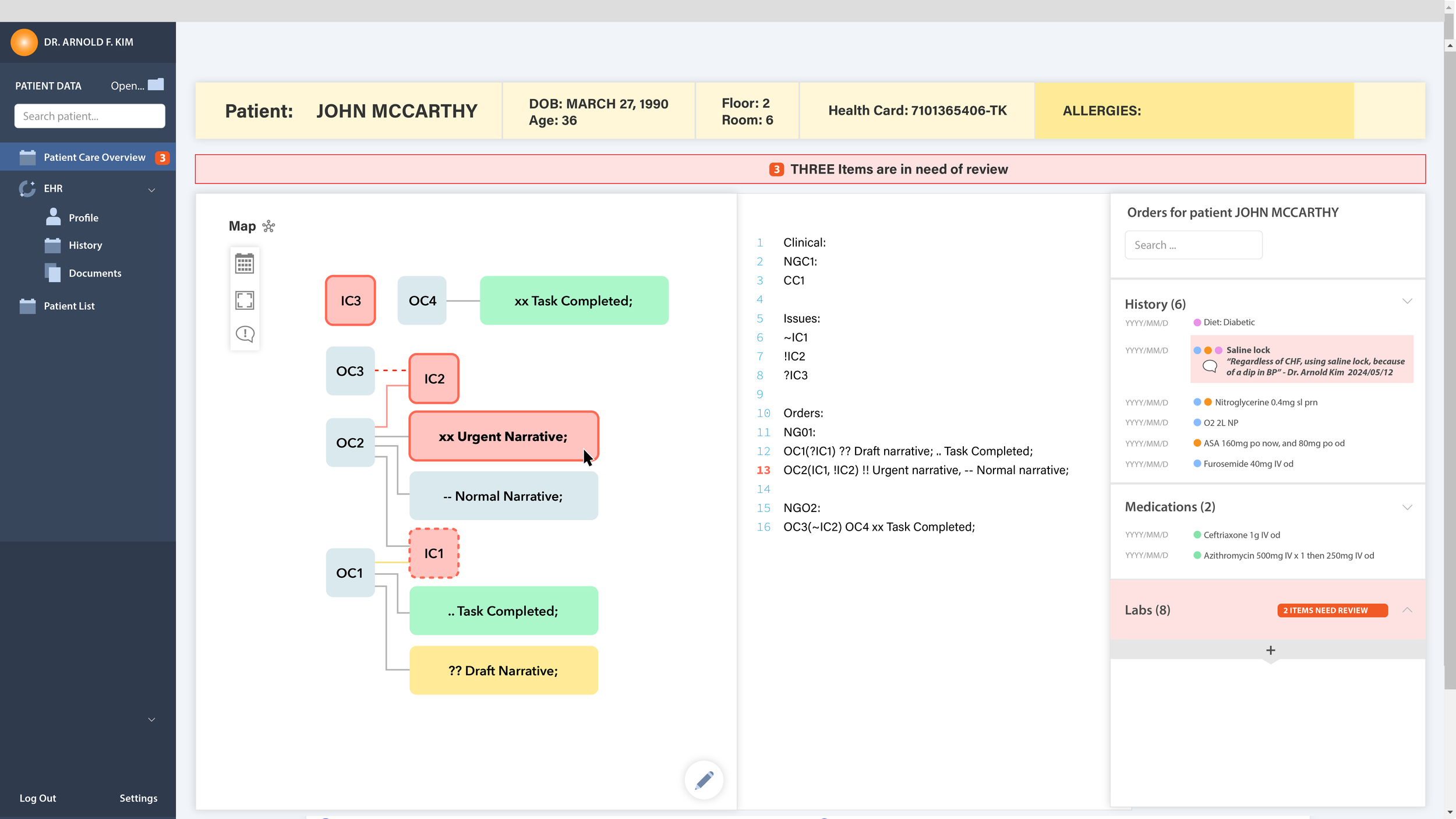
Rethinking the Representational / DesignSpace of EHRs towards Computer Aided Design (CAD)
In a formal synthesis, relationships between concepts are of paramount importance to ease cognitive burden, allow for deterministic validation and inferences, better data analytics and many opportunities for inline and downstream automation and interoperability. The fundamental thesis of this initiative is essentially driven by seeking useful structural similarities between healthcare and the many differing design disciplines…

Diagnosis: EHR Fragmentation Resulting in Unnecessary Cognitive Burden
If you ask almost any doctor, nurse, or hospital clinician about their biggest daily frustration, chances are they won't say complex medical diagnoses. They'll say their software. Modern Electronic Health Record (EHR) systems were originally created to replace paper charts, but over time, healthcare software became cluttered, repetitive, and difficult to navigate…

White Paper
During the diagnosis, treatment and management of medical conditions, the sheer volume of information that a healthcare provider must consider is colossal. It seems as though there is no feasible way to condense it all onto one small computer screen, and any attempt to do so would be similar to trying to view a large room from a keyhole. This is because EHRs present discrete concepts using static spatial allocation of widgets to represent data types. Accessing all the information needed in order to…